
If dust seems to return almost immediately in your Lincoln home, focus less on cleaning twice as often and more on where soil enters, where it settles, and the specific sequence you use to clean. Start at exterior entryways, dust high surfaces before lower ones, use microfiber to trap particles, and vacuum floors last.
Lincoln typically becomes windier through September and early October, with warm, dry stretches between seasonal rain events. Prairie soil, open doors, active pets, and daily foot traffic continually add to the fine dust circulating indoors.
Control Dust at the Entry Points
Shoes, pets, backpacks, and daily foot traffic carry fine Nebraska soil inside. Clean entry mats frequently and vacuum the first few feet inside exterior doors much more often than quiet guest rooms.
Establishing this simple habit makes professional house cleaning in Lincoln last much longer because less abrasive grit makes its way into your living areas.
Clean High Surfaces Before Anything Below
Ceiling fans, door headers, upper shelves, and window blinds hold fine dust that drops the moment it gets disturbed. Always start at the ceiling line before wiping furniture surfaces or vacuuming floors.
Use Microfiber Instead of Moving Dust Around
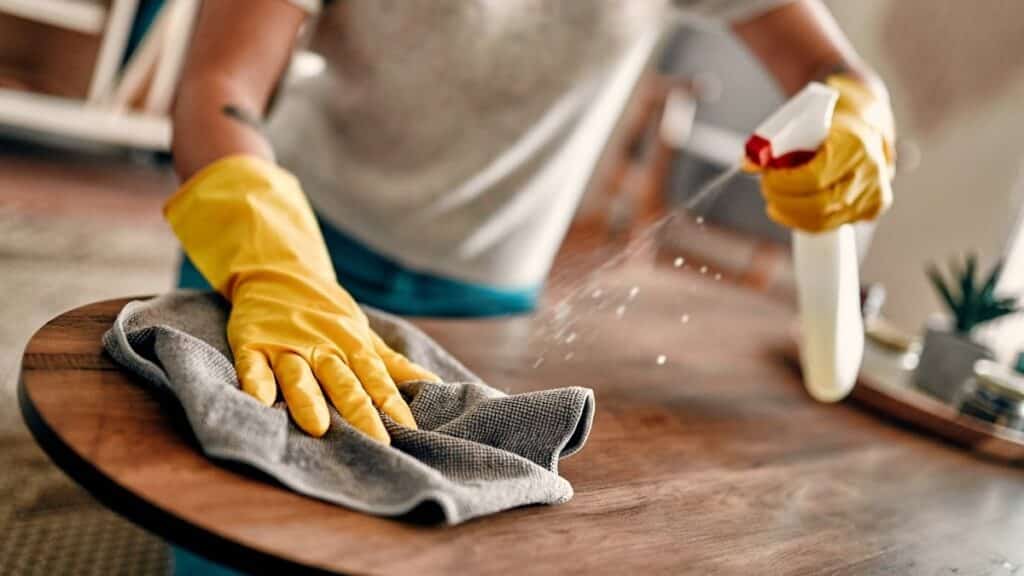
On washable hard surfaces, a slightly damp microfiber cloth traps fine particles far more effectively than a dry feather duster that simply scatters dust into the air. Always select a damp-dusting method that is safe for your wood or paint finish.
Vacuum Fabrics That Hold Fine Particles
Area rugs, upholstered sofas, pet beds, and fabric headboards hold fine dust long after wooden tables look clean. Vacuum upholstered furniture slowly using a fabric tool and launder removable cushion covers according to care labels.
Check the Edges of the Room
Dust naturally drifts along baseboards, beneath furniture, and into corners where daily foot traffic doesn’t disturb it. A narrow crevice attachment is far more useful in these hidden spots than making another pass down the center of an open room.
Know When Dust Is Really Detail Buildup
If blinds, fans, baseboards, cabinet fronts, and under-furniture spaces all need attention, a deep cleaning can provide a more complete reset instead of chasing one dusty surface at a time.
Use a Better Cleaning Order
When tackling room dust, follow this precise high-to-low sequence so falling particles don’t ruin work you’ve already completed:
- Ceiling fans and high ledges
- Window blinds and curtain rods
- Furniture tops and counters
- Baseboards and room perimeters
- Upholstery and area rugs
- Hard floors (Save for last)
Frequently Asked Questions
Why does my Lincoln home get dusty so fast?
Outdoor dirt, wind, pets, open doors, fabrics, and normal household activity all contribute. Air movement then redistributes particles already inside.
Should I vacuum before dusting?
Usually no. Dust high surfaces first, then vacuum so the floor catches what falls.
Do I need to wipe every baseboard every week?
No. Focus on the areas with visible buildup, especially near doors, vents, and busy hallways.
When does a deep clean make sense?
When detailed dust and grime are spread across multiple rooms and regular maintenance no longer catches up.
Make Dust Control More Efficient
The goal isn’t eliminating every single speck of dust—it’s stopping unnecessary buildup and cleaning in a sequence that makes every pass count. If detailed dust has expanded beyond what you want to manage on your own, contact us and Queen Bee Cleaning Services can help restore your home to a clean, manageable baseline.
